

Temporomandibular Joint Disorders (TMJ)
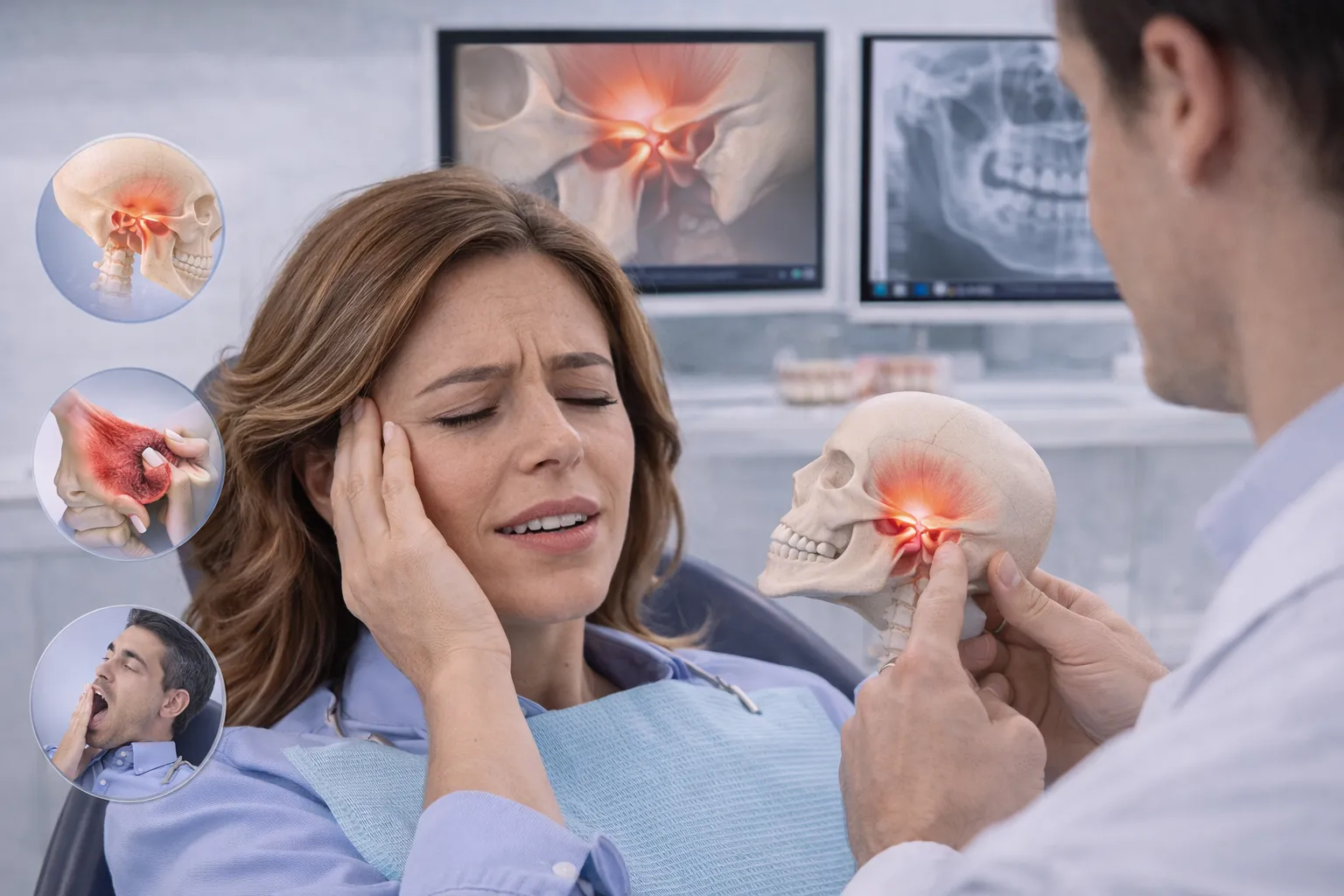
What is the Temporomandibular Joint (TMJ)?
The temporomandibular joint is a bilateral synovial joint located between the temporal bone and the mandible (lower jaw), with an articular disc at its front. This disc separates the bone surfaces during jaw movements, preventing friction.
TMJ disorders are addressed in three main categories: muscle-only (myofascial pain), joint-only (disc displacement, arthrosis) and mixed type. This distinction directly determines the treatment approach; therefore, accurate diagnosis is of critical importance.
Symptoms of TMJ Disorder
TMJ complaints are frequently misdiagnosed due to the referred nature of pain that makes identifying the source difficult. Headache is referred to a neurologist, ear pain to an ENT specialist, and jaw pain to a dentist — yet the source may be the same.
A "click" or "grinding" sound when opening and closing the mouth. The most common indicator of disc displacement.
Difficulty opening the mouth in the morning or sudden locking. Opening movement is restricted (normal: 40–60 mm).
Pain in front of the ear, cheek or temple area. Increases with chewing or prolonged speaking.
Muscle fatigue and temple pain in the morning due to nocturnal bruxism. Frequently mistaken for migraine.
Due to anatomical proximity, TMJ inflammation can mimic ear pain. ENT finds no findings.
TMJ muscles and the joint work together with middle ear muscles. TMJ tension can trigger tinnitus.
The jaw slides to one side when opening the mouth. It is a sign of disc displacement or muscle asymmetry.
Bruxism, which frequently accompanies TMJ disorder, causes enamel wear and sensitivity.
Causes of TMJ Disorder
- Bruxism (teeth clenching/grinding): Excessive force on the joint and muscles is the most common cause. Unconscious forces are much higher in nocturnal bruxism.
- Malocclusion (bite disorder): Incorrect bite causes the jaw muscles to constantly work unevenly; the load on the joint becomes unbalanced.
- Stress and anxiety: Muscles tense involuntarily under stress; the vulnerable joint is damaged by this load.
- Missing teeth: Especially the loss of back molar teeth destabilizes the jaw load; the joint bears excessive stress.
- Trauma: A blow to the jaw, accidents or wide mouth opening during prolonged dental treatments can strain the articular disc.
- Incorrect dental treatment: A filling, crown or prosthesis made at the wrong height disrupts occlusal balance and affects the TMJ.
- Postural disorders: Head-neck muscles work in connection with jaw muscles; neck and shoulder tension contributes to TMJ complaints.
TMJ Diagnosis and Assessment
Accurate diagnosis of TMJ disorder involves a combination of medical history, clinical examination and imaging when needed. A comprehensive assessment is essential due to the referral of symptoms to other sources (migraine, ENT, neurology).
Mouth opening measurement (normal: 40–60 mm) · Jaw deviation during opening · Palpation: tenderness in masseter, temporal, pterygoid muscles · Listening for joint sounds (clicking, crepitation)
Joint condyle morphology, bony changes and occlusal analysis are evaluated. Basic imaging; fast and accessible.
Three-dimensional imaging of the joint condyle and fossa; detection of bone erosion and deformities. Indicated especially in advanced cases.
The most accurate method for showing disc position and displacement. Applied when disc perforation or chronic locking is suspected.
ENT consultation if tinnitus is present · Neurology evaluation if headaches are intense · Physiotherapy collaboration for neck-shoulder tension · All findings are evaluated in an integrated manner
Wear patterns on tooth surfaces, occlusal contacts and load distribution are examined. Guides the treatment plan; shapes splint design.
Occlusal Splint Therapy
The occlusal splint (night guard / joint plate) is the primary and most evidence-based treatment option for TMJ disorders. It is a transparent, removable appliance custom-made for the upper or lower jaw.
Masseter / Temporal Botox and Myofascial Mesotherapy Combination
Botulinum toxin (Botox) delivers extremely effective results in muscle-originated TMJ pain and bruxism-related joint loading. By selectively relaxing the masseter and temporal muscles, the force on the jaw is reduced; pain and locking are alleviated.
The combination of these two approaches is offered under one roof at our clinic, unlike most competing clinics in Ankara. Comprehensive TMJ treatment targeting both muscle-originated pain and joint loading is possible.
Occlusal (Bite) Adjustment Treatments
If one of the underlying causes of TMJ is malocclusion, managing symptoms alone is not sufficient; the cause must also be eliminated. At this stage, prosthetic and restorative treatments come into play.
| Treatment | Target | Description |
|---|---|---|
| Selective grinding (occlusal equilibration) | Eliminating high occlusal contacts | Incorrect filling or crown height is corrected; muscles relax |
| Filling / Crown renewal | Re-establishing occlusal balance | Old or faulty restorations are brought into balance |
| Orthodontics | Correcting skeletal malocclusion | Long-term solution; joint loading normalizes at end of active treatment |
| Missing tooth replacement (implant/bridge) | Balancing jaw load distribution | Provides TMJ-protective effect especially in posterior edentulism |
| Prosthesis optimization | Gum and jaw balance | Incorrectly occluding removable/fixed prosthesis directly affects TMJ |
The timing of occlusal treatments is critical: structural corrections should be planned after acute pain and muscle spasm have been relieved (splint + Botox phase).
TMJ and Tinnitus Connection
The temporomandibular joint and middle ear muscles (tensor tympani, tensor veli palatini) are innervated by the same trigeminal nerve branches. Due to this anatomical connection, TMJ tension may manifest as ear fullness, ear pain and tinnitus (ringing in the ears).
Daily Life Tips for TMJ Patients
Avoid hard, large, crunchy foods. Cut food into small pieces; chew equally on both sides. Quit chewing gum completely.
Stop biting nails, pens or lips. Change your phone-holding habit (head-neck pressure). Follow your dentist's instructions during wide yawning and long treatments.
Mindfulness exercises, meditation and regular sleep directly reduce muscle tension. Stress management is a sustainable part of TMJ treatment.
Sitting at a computer with the jaw protruding forward constantly strains jaw muscles. Spine correction exercises and relaxing neck muscles reduce the load on the joint.
Cold in the acute phase (first 48–72 hours); warm moist towel for 10–15 minutes for chronic muscle tension increases muscle comfort.
Splint fit, joint sounds and mouth opening should be evaluated every 3–6 months. If splint use is neglected, symptoms return.

Dr. Sevgi Savaş Akbaş
Dentist · TMJ · Occlusal Treatment · Masseter Botox · Ankara İncekDr. Sevgi Savaş Akbaş manages temporomandibular joint disorders at her Ankara İncek clinic with a multidisciplinary approach combining digital imaging, occlusal analysis, custom splint application, masseter and temporal Botox, myofascial therapy and dental mesotherapy. Comprehensive treatment planning including occlusal adjustment, missing tooth replacement and physiotherapy collaboration is offered; atypical symptoms including tinnitus are also included in the assessment.
Temporomandibular Joint Disorders (TMJ) – Frequently Asked Questions
My jaw clicks but I have no pain — is treatment necessary?
How can I tell if it is jaw pain or a migraine?
How long does TMJ treatment take?
Is a splint enough, or is Botox also necessary?
Can tinnitus (ringing in the ears) originate from the jaw joint?
Can my jaw joint problem originate from my malocclusion?
My jaw has locked — what should I do?
Is TMJ surgery really necessary?
Does chewing gum worsen TMJ?
Can neck and shoulder pain be related to TMJ?
Why Sevgi Savaş Clinic in Ankara İncek for TMJ treatment?
Get an Assessment for Your Jaw Joint
Have a comprehensive TMJ assessment at our Ankara İncek clinic for your complaints of jaw pain, clicking, morning headaches or tinnitus.
Call Now WhatsApp Ankara Dental Clinic