

Dental Botox
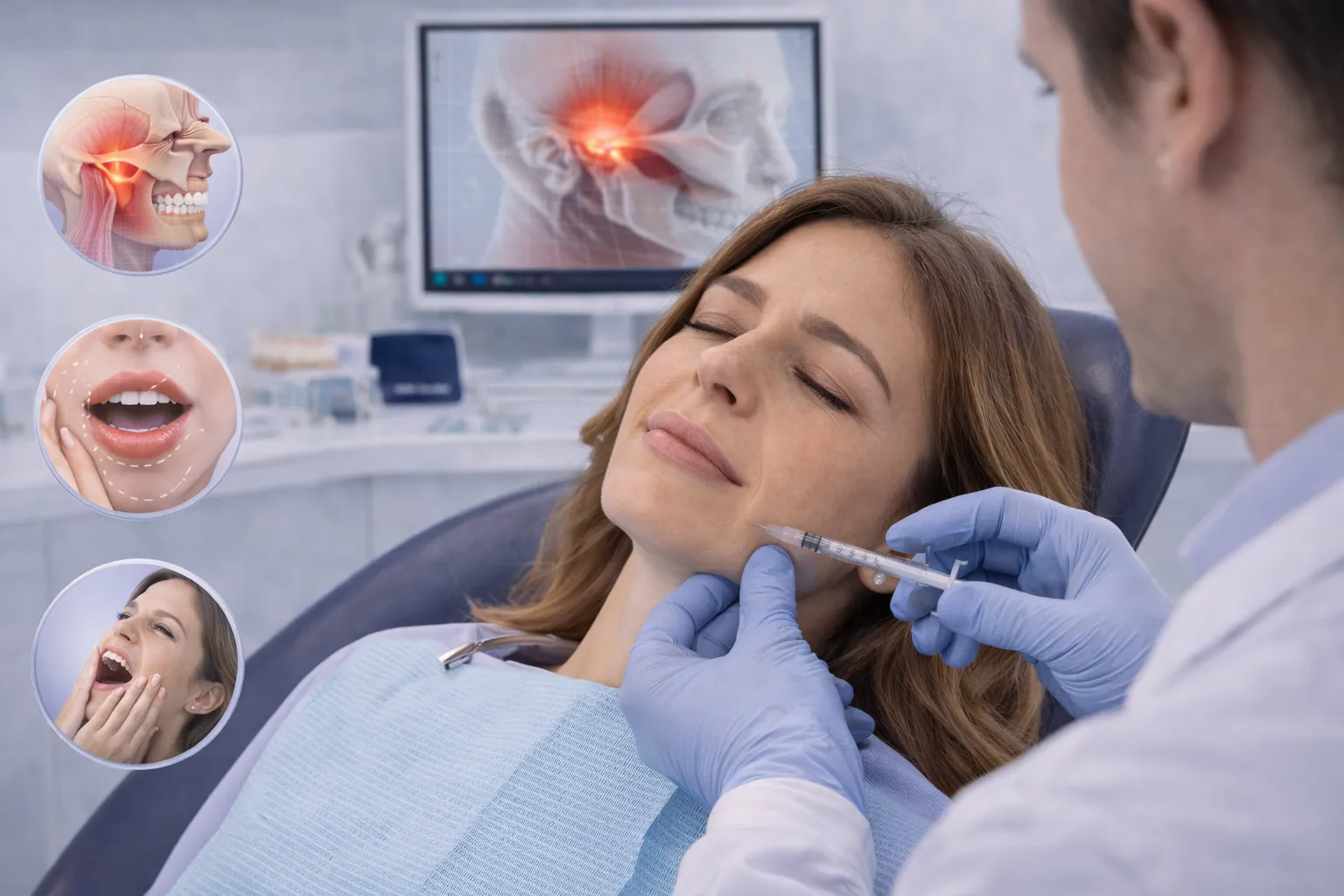
Masseter Muscle Botox – Bruxism Treatment and Jawline Aesthetics
The masseter is the most powerful chewing muscle that lifts the lower jaw and drives the majority of chewing movements. The masseter, which overworks due to chronic teeth clenching or grinding (bruxism), develops hypertrophy (enlargement) over time. This both damages the temporomandibular joint (TMJ) and creates a square/angular appearance on the face.
Masseter Botox reduces the contraction force of the muscle, lowering the load on the joint, alleviating jaw pain and slimming the facial contours to provide a more oval appearance.
Jaw pain from teeth clenching and grinding is reduced · Enamel wear on teeth slows down · Load on the TMJ decreases · Morning head and temple pain is alleviated · Sleep quality improves
Square jawline gradually transforms into an oval form · Improvement in facial asymmetry · Lower face slimming · Prominence at jaw corners decreases · Natural appearance; no surgical scarring
2–3 days: Muscles begin to relax · 7–14 days: Full functional effect · 4–6 weeks: Aesthetic slimming becomes visible · 4–6 months: Functional effect duration · 4–9 months: Cosmetic effect duration
Direct injection into the muscle with local anesthetic cream or fine needle · 10–20 minutes · Small doses at multiple points · Immediate return to daily life after procedure · Follow-up: assessment after 2 weeks
Temporal Muscle Botox – Temple Region and Morning Headaches
The temporal muscle is a powerful chewing muscle positioned like a wide fan in the temple region. It becomes overactivated together with the masseter in teeth clenching. Morning temple pain, headaches spreading to the forehead or skull base area frequently originate from overworking of the temporal muscle.
Gummy Smile Botox – Upper Lip Elevator Muscle Injection
The excessive visibility of gums when smiling is called "Gummy Smile." One of its causes is the overactivity of the upper lip elevator muscles (levator labii superioris, zygomaticus minor). A small-dose Botox injection to this muscle group significantly reduces gum visibility by decreasing how much the lip rises when smiling.
Splint + Botox Combination – Comprehensive TMJ Approach
Splint and Botox work through different mechanisms; their combination delivers much stronger results than either one alone.
| Method | Mechanism of Action | Area of Protection | Limitation |
|---|---|---|---|
| Splint | Equalizes contact points between teeth; provides free mobility in the jaw | Protects teeth and joint from wear | Does not stop the clenching behavior of muscles |
| Masseter / Temporal Botox | Reduces muscle contraction force; lowers teeth clenching force | Reduces joint load and muscle pain | Does not physically protect teeth |
| Combination | Synergistic effect of both | Teeth + joint + muscle protected in an integrated manner | The underlying cause must also be treated |
Long-Term Muscle Atrophy – Does Botox Become Permanent?
A single Botox session is temporary; however, regular repetitions can create a significant change in muscle structure. As the muscle's contraction force decreases and it becomes "unused" over successive sessions, muscle mass also gradually decreases (atrophy). This mechanism produces two important outcomes with long-term use:
Dental Botox Application Process
Muscle palpation, chewing analysis, bruxism severity and Gummy Smile assessment are performed. Target muscles and application points are determined. Botox quantity (units) is calculated according to the individual and muscle mass size.
The application area is cleaned with antiseptic. Injection points are marked. If desired, anesthetic cream is applied to the area; most patients tolerate the procedure comfortably without cream.
Small doses are applied to each point with a very fine needle. The procedure takes 10–20 minutes. A slight needle sensation may be felt; it is painless or minimal.
No massage for 24 hours; no pressure on the treated area · Avoid lying down and bending for 4–6 hours · Strenuous exercise not recommended on the first day · Follow-up appointment planned after 2 weeks
Effect is assessed on days 2–14. If response is insufficient, a small additional dose can be applied. Repeat session interval is planned as 4–9 months according to patient response.
What to Watch Out for After Dental Botox
Do not massage or apply pressure to the injection area. Do not remain in a head-down position. Strenuous exercise is not recommended. Very hot environments or sauna are not recommended on the first day.
Avoid bending and lying down. Stay in an upright position to prevent Botox from migrating from the injection site. Alcohol consumption may increase Botox spread; not recommended.
Temporary mild swelling or redness at the injection site is normal; it passes within a few hours. Rare bruising is managed with a cold compress. Temporary mild strange sensation in chewing normalizes within 1–2 weeks.
Noticeable asymmetry in smiling · Drooping eyelid · Difficulty swallowing · Unexpected pain · These are rare but signs that should be reported; the risk is very low with an experienced practitioner.
Who Can and Cannot Have Dental Botox?
| Condition | Suitable? | Description |
|---|---|---|
| Bruxism / teeth clenching | ✅ Ideal candidate | Masseter + temporal combination; planned together with splint |
| TMJ-related jaw pain | ✅ Suitable | An effective component of conservative treatment |
| Gummy Smile (muscle-caused) | ✅ Suitable | Low-dose injection to upper lip elevator muscles |
| Masseter hypertrophy | ✅ Suitable | Aesthetic facial slimming |
| Pregnancy and breastfeeding | ⛔ Not applied | Not recommended during this period for safety |
| Botulinum toxin allergy | ⛔ Not applied | Absolute contraindication |
| Neuromuscular diseases (MG, ALS) | ⛔ Not applied | Muscle relaxant effect can cause serious complications |
| Active infection (at application site) | ⛔ Deferred | Can be applied after infection clears |
| Use of blood thinning medication | ⚠️ Assessment required | Hematoma risk; can be applied with physician approval |
| Under 16–18 years of age | ⚠️ Careful assessment | Not recommended for aesthetic purposes before muscle development is complete |
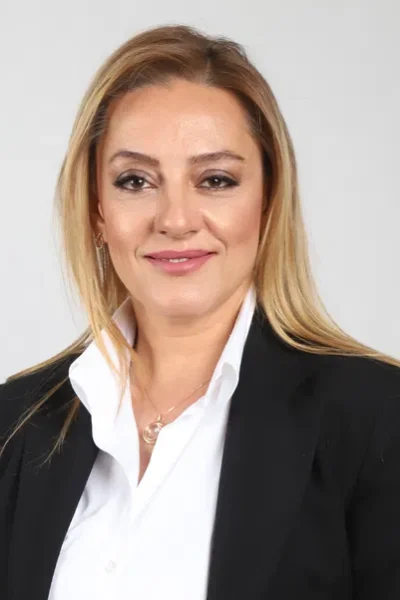
Dr. Sevgi Savaş Akbaş
Dentist · Dental Botox · Masseter · Gummy Smile · Ankara İncekDr. Sevgi Savaş Akbaş applies masseter and temporal muscle Botox at her Ankara İncek clinic in combination with splint and myofascial therapy for bruxism, TMJ and headache treatment. Gummy Smile Botox is planned as a complementary component of aesthetic smile design; a personalized dose and repeat interval is determined in line with each patient's muscle mass, complaint profile and expectations.
Dental Botox – Frequently Asked Questions
Is dental Botox painful?
When does dental Botox take effect?
How long does the Botox effect last?
Does Botox replace splint treatment?
How long does Gummy Smile Botox last and is the effect permanent?
Does masseter Botox affect chewing?
Does regular Botox use damage the muscle?
Should Botox only be administered by dentists?
Can Botox be effective for my morning headaches?
Can Botox be administered during pregnancy or breastfeeding?
Why Sevgi Savaş Clinic in Ankara İncek for dental Botox?
Book an Appointment for Dental Botox Assessment
Have a personalized dental Botox plan made at our Ankara İncek clinic for your complaints of teeth clenching, jaw pain, morning headaches or Gummy Smile.
Call Now WhatsApp Ankara Dental Clinic