

Laminate Veneer Restorations
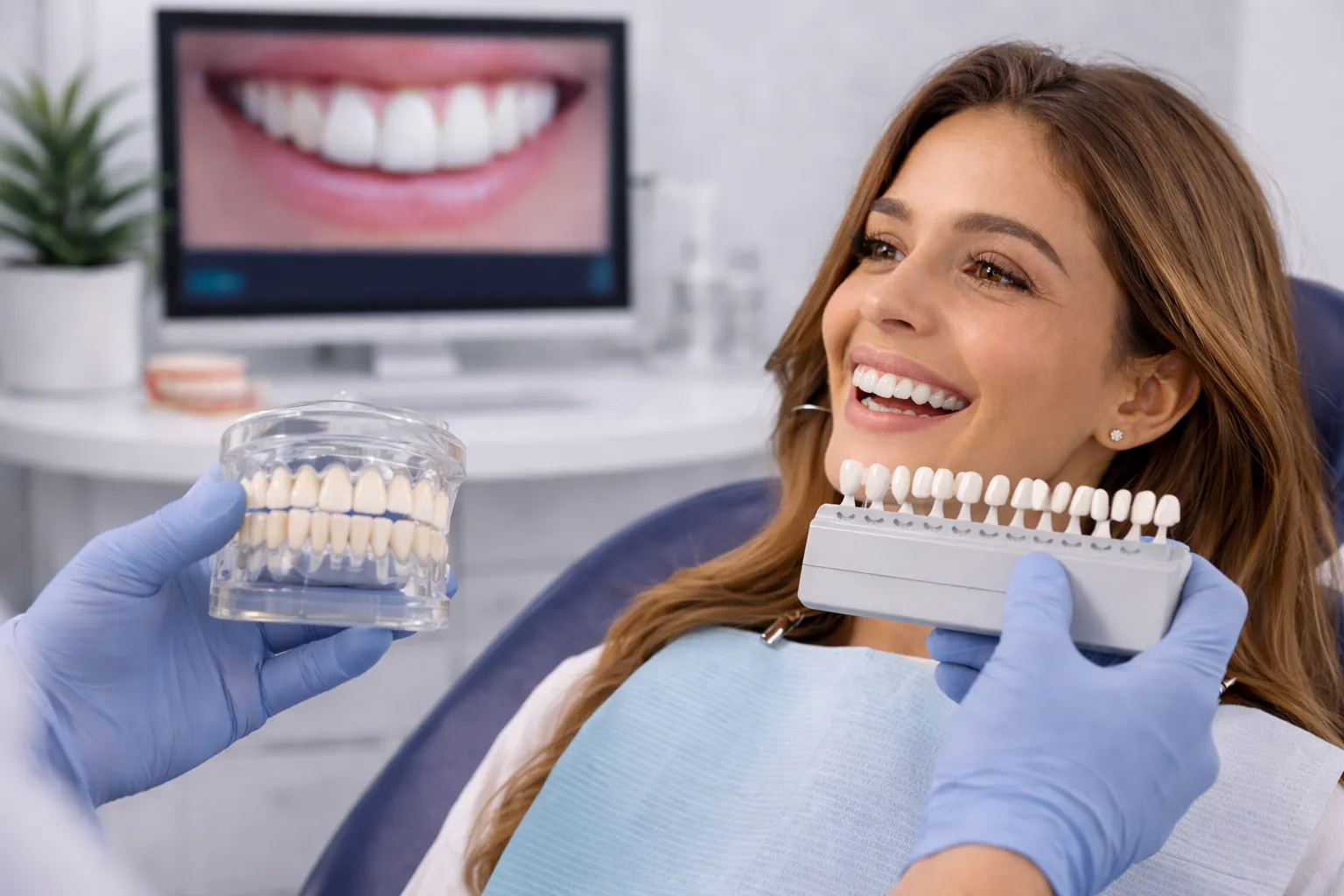
What Is a Laminate Veneer?
A laminate veneer is a thin aesthetic restoration made from porcelain or composite material that is chemically bonded to the front surface of the tooth with a special adhesive. It is also commonly known as "leaf porcelain," "leaf tooth" or "nail porcelain."
Unlike traditional full crowns, a laminate veneer covers only the visible front surface of the tooth; the back of the tooth remains untouched. For this reason, laminate veneer is defined as the aesthetic restoration method that affects tooth structure the least. In suitable cases, tooth preparation can be reduced to zero.
Porcelain Laminate Veneer – E.max Technology
Porcelain laminate veneer is considered the "gold standard" in aesthetic dentistry. Veneers produced with E.max (lithium disilicate glass ceramic) technology mimic the light refraction and transmittance properties of a natural tooth, producing results virtually indistinguishable from a real tooth.
They are produced on a personalized basis in the laboratory from a digital impression or conventional mould. For this reason, their application requires 2–3 sessions; however the result offers permanence of 10–15 years and beyond.
The translucency property of E.max ceramic mimics the internal light reflection of the tooth. It does not look artificial even in sunlight or flash photography.
The porcelain surface shows much higher resistance to colouring agents such as coffee, tea, wine and cigarettes compared to composite. Lustre is maintained for years.
With correct care and regular check-ups, it can be used for 10–15 years, and under suitable conditions even longer. It is the most economical aesthetic solution in terms of long-term investment.
Contains no metal; no allergy risk. Does not irritate the gum. Offers high compatibility with gingival health; no dark colour line forms at the gum margin.
Non-Prep Veneer – Application with Zero Preparation
Non-prep (preparation-free) veneer is the laminate veneer option applied without removing any tissue from the tooth surface. This method is only possible in certain indications — particularly in cases with small teeth, gaps between teeth or slightly inward-tilted teeth.
Non-prep veneer is fully aligned with holistic and minimally invasive dentistry principles as the restoration option that "touches the least tissue."
Composite Laminate Veneer
Composite veneer is a laminate veneer method completed in a single session in the clinical setting by direct application of special aesthetic composite resin, without a laboratory stage. It is ideal for cases where minor aesthetic flaws need to be quickly corrected.
Porcelain Veneer – Composite Veneer – Zirconia Crown Comparison
| Feature | Porcelain Laminate (E.max) | Composite Veneer | Zirconia Crown |
|---|---|---|---|
| Tooth preparation | Minimal (0–0.7 mm) | None or very little | Moderate–high |
| Light transmittance | Very high (natural) | Moderate | High |
| Colour stability | Very high | Moderate | Very high |
| Lifespan | 10–15+ years | 5–7 years | 15–20 years |
| Application time | 2–3 sessions (lab) | Single session | 2–3 sessions (lab) |
| Preferred region | Front teeth | Minor flaws | All teeth |
| Cost | Moderate–high | Moderate | High |
| Reversible? | Partially (yes in non-prep) | Yes | No |
Which option is appropriate is determined by evaluating the current condition of the tooth, the severity of discolouration, the bite structure and the patient's aesthetic expectations.
What Problems Does Laminate Veneer Resolve?
Permanent staining from coffee, tea, cigarettes or antibiotics (tetracycline); in cases where whitening is insufficient, the discolouration is completely concealed with veneer.
Fractures in front teeth following trauma are repaired aesthetically and permanently with porcelain veneer when composite bonding is insufficient.
Gaps between front teeth (diastema) are closed with a natural appearance using veneer. Orthodontic assessment may first be required in wide diastema cases.
The form of small, conical or irregular teeth is reshaped with veneer; symmetrical and aesthetic proportions are achieved.
In smile design, tooth lengths are extended to optimize the tooth-lip ratio; a younger and more aesthetic smile is obtained.
Mild rotations or positional irregularities can be aesthetically masked with veneer. For advanced crowding, orthodontic treatment is recommended first.
Laminate Veneer Application Process
Intraoral and extraoral photographs are taken. The current condition of tooth tissue, bite structure and severity of discolouration are evaluated. Patient expectations and aesthetic goals are established.
At our clinic, the smile planned with Digital Smile Design (DSD) technology and visagism assessment is shown to the patient digitally in advance. Colour, length and form decisions are made together.
For porcelain veneer, a minimum of 0.3–0.7 mm is removed from the front surface of the tooth; the back is not prepared. This step is skipped for non-prep applications. Local anaesthesia is applied if required.
The form of the teeth is transferred to the laboratory with a digital intraoral scanner or conventional impression. Veneer production begins.
Temporary veneers are applied throughout the laboratory process (4–7 days). The patient tries out their new aesthetics in daily life; makes their final decision during this time.
The permanent veneers arriving from the laboratory are first trialled with temporary adhesive. Colour, form and fit are approved; corrections are sent to the laboratory if necessary.
The tooth surface is etched and the veneers are permanently bonded with special adhesive and light-curing cement. Occlusion check and final adjustments are made.
Total time is 7–10 days for porcelain veneer, a single session for composite veneer. For urgent aesthetic needs, it is possible to achieve results within the same week.
Laminate Veneer Care and Lifespan
With correct care, porcelain veneers can be used for 10–15 years or longer. The main factors determining lifespan are material quality, bonding technique and the patient's oral hygiene.
Use a soft-bristled toothbrush and fluoride toothpaste. Brushing twice daily and cleaning with dental floss/interdental brush prevents decay from forming under the veneers.
Avoid biting excessively hard foods such as nut shells, ice and hard bread crusts with veneered teeth. Thin porcelain can be fragile against high point forces.
If bruxism (teeth clenching) habit is present, night guard use is mandatory. Excessive force on veneers can lead to fracture or bonding separation.
A 6-monthly dental check-up is critical for checking that veneer margin fit, bonding and the underlying tooth tissue are healthy.
Porcelain surface is resistant to staining; however for composite veneer, reducing coffee, red wine and cigarette consumption preserves colour stability.
Heavily abrasive toothpastes or tooth whitening strips can scratch the veneer surface. Use dentist-approved oral care products.
Who Cannot Have Laminate Veneer?
Veneer is not a universal solution applicable to every patient. The following situations require assessment before application or preference of a different treatment option.
| Situation | Assessment |
|---|---|
| Active gum disease | Periodontal treatment first; veneer applied when gums are healthy |
| Untreated tooth decay | Veneer cannot be applied before decay is treated |
| Severe malocclusion | Bite corrected first with orthodontic treatment or prosthesis |
| Uncontrolled bruxism | Not recommended until brought under control with Botox/splint treatment |
| Protruding lower jaw (Class III bite) | Veneer cannot be applied before bite is corrected |
| Under 18 (development not complete) | Awaited until tooth development is complete |
| Excessive tooth tissue loss | Insufficient bonding surface remains for veneer; crown is preferred |

Dr. Sevgi Savaş Akbaş
Dentist · Aesthetic Dentistry · Laminate Veneer · Ankara İncekDr. Sevgi Savaş Akbaş offers porcelain laminate veneer (E.max), non-prep veneer and composite veneer applications at her Ankara İncek clinic together with visagism analysis, Digital Smile Design (DSD) and mock-up approval process. Each veneer case is managed with comprehensive examination, digital planning and approved laboratory collaboration; personalized results fully aligned with the patient's expectations and facial structure are targeted.
Laminate Veneer – Frequently Asked Questions
Is laminate veneer application painful?
How many days does it take to prepare porcelain veneer?
How many years does porcelain veneer last?
What is non-prep veneer — can it be applied to everyone?
Should I choose laminate veneer or a zirconia crown?
After veneers are fitted, can they be distinguished from natural teeth?
What can I eat and drink after having veneers?
Can someone who clenches their teeth have veneers?
Are veneers applied to one tooth or all front teeth?
Can the tooth under a veneer decay?
Why Sevgi Savaş Dental Clinic in Ankara İncek for laminate veneer?
Let Us Design Your New Smile
Book an appointment at our Ankara İncek clinic for personalized laminate veneer planning with digital smile design and the visagism method.
Call Now WhatsApp Ankara Dental Clinic