

Orthodontics
What Is Orthodontics?
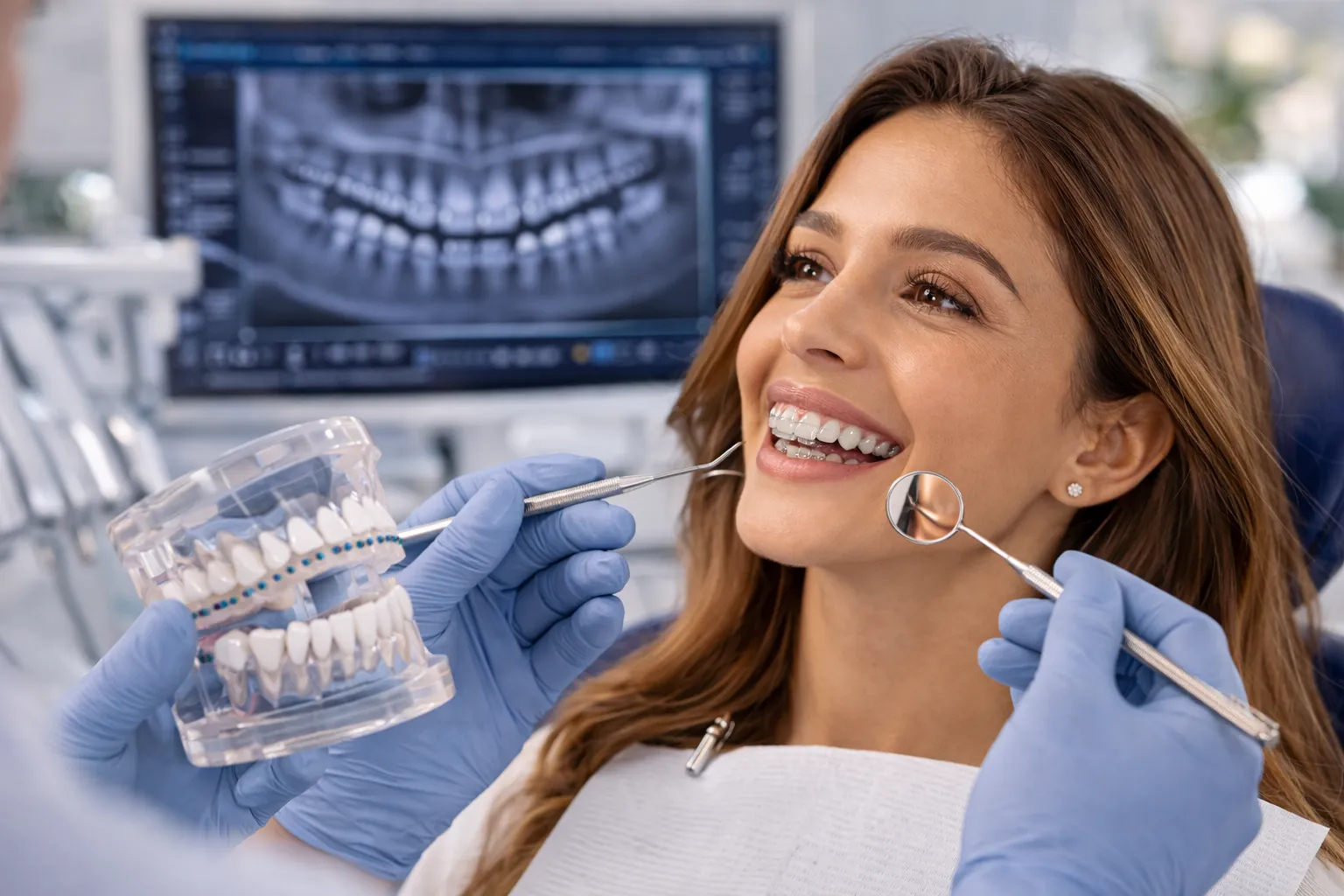
Orthodontics is the specialty that examines the position and relationship of teeth, dental arches and the jaw, and corrects disorders in these regions with fixed or removable appliances. The goal of treatment is not merely to align teeth; it is to achieve both functional occlusion (correct bite) and an aesthetic, healthy smile together.
Orthodontic treatment can be applied to children, adolescents and adults. Today, approximately half of the patients treated at orthodontic clinics are adults. Age is no barrier to treatment; orthodontic correction is possible at any stage where bone health is sufficient.
Dental and Jaw Problems Addressed by Orthodontics
Any of the following problems are among the conditions requiring orthodontic assessment. Early diagnosis shortens treatment duration and increases the permanence of results.
Teeth are overlapping or rotated; cleaning is difficult, risk of decay has increased.
Significant forward positioning of upper front teeth relative to lower teeth.
When biting, the lower front teeth are completely covered by the upper teeth.
When back teeth contact, a gap remains between front teeth; swallowing becomes difficult.
Lower teeth sit outside the upper teeth; can lead to jaw asymmetry.
Aesthetic and functional gaps between teeth, especially visible between the upper front teeth.
Misalignment of the centrelines of upper and lower teeth; affects facial symmetry.
Due to the narrow structure of the upper or lower jaw, insufficient space remains for the teeth.
Orthodontics with Metal Brackets (Classic Braces)
Metal brackets are the most established and proven method of orthodontic treatment. Small metal brackets bonded to the teeth and the wire running between them gradually guide the teeth to their ideal position.
Orthodontics with Porcelain (Clear) Brackets
Porcelain brackets work on the same mechanical principle as metal brackets; the only difference is the material and appearance. With their ceramic structure close to tooth colour, they attract much less attention than metal brackets. They are especially preferred by adult patients with high aesthetic concerns.
| Feature | Metal Bracket | Porcelain Bracket | Clear Aligner |
|---|---|---|---|
| Visibility | Noticeable | Less noticeable | Nearly invisible |
| Complex case | Excellent | Good | Limited |
| Removable? | No | No | Yes |
| Hygiene ease | Moderate | Moderate | Easy |
| Fragility | Low | Moderate (ceramic) | Low |
| Cost | Low | Moderate | High |
Clear Aligner Treatment
Clear aligners are removable and nearly invisible orthodontic appliances produced on a personalized basis based on a digital dental impression. Invisalign is the best-known brand of this system; similar technologies from different manufacturers are also available.
Each set of aligners moves the teeth approximately 0.25–0.5 mm; they are generally changed for a new set every two weeks. They must be worn for at least 20–22 hours per day; they are removed during eating, drinking and tooth brushing.
Mild and moderate crowding, gaps, mild malocclusion. For complex jaw problems or advanced malocclusion, the bracket system is more effective.
The treatment goes unnoticed from outside in professional life, social settings and special events. It is the great preference of adult patients.
Being removable makes tooth brushing easier and preserves gum health. No irritation caused by metal brackets is experienced.
It must be worn for 20–22 hours per day. Removing or forgetting the aligners frequently extends treatment time and negatively affects results.
Early Diagnosis and Orthodontics in Children
Early detection of orthodontic problems significantly reduces treatment duration and complexity. Interventions made while the jawbone is in the growth phase can guide development and prevent severe cases in the future.
According to international standards, the first orthodontic assessment should be performed at age 6–7. At this age, correction of all teeth is not expected; rather the aim is to detect problems affecting jaw development and intervene at the right time.
Functional Orthodontics and Correct Swallowing Therapy
Functional orthodontics addresses not only the alignment of teeth but also the balance of jaw muscles, the correct swallowing reflex and oral habits. Incorrect swallowing (such as forward tongue thrusting), thumb sucking or mouth breathing habits can adversely alter tooth positions and jaw development.
With functional appliances and myofunctional exercises, these habits are corrected, jaw muscles are balanced and permanent teeth settle into healthier positions. This treatment provides the highest efficiency especially in the 6–12 age range; skeletal correction is not possible after bone development is complete.
Adult Orthodontics
Contrary to widespread belief, orthodontics is not exclusive to children and adolescents. Today, approximately half of orthodontic patients are adults. In adults, bone development is complete; therefore only tooth movement is possible — skeletal guidance cannot be performed. However, this does not mean treatment is ineffective.
If neighboring teeth have tilted into a gap due to tooth loss, orthodontic correction is required before placing an implant or bridge.
Teeth that have become spaced due to gum disease can be brought closer together with orthodontic treatment; the retention wire functions as a splint.
Adults who are uncomfortable with their smile, particularly those active in professional life, can undergo a comfortable treatment process with porcelain brackets or clear aligner.
Incorrect bite can cause clicking, pain and headaches in the jaw joint. Orthodontic correction can reduce these symptoms.
Aligned teeth are easier to brush; spaces can be cleaned. Crowding is an important risk factor for decay and gum disease.
Research shows that orthodontic treatment has a positive effect on self-confidence and social life in adults.
Retention Phase – The Most Important Stage of Treatment
The retention phase is the critical process following the completion of active orthodontic treatment in which the teeth are stabilized in their new positions. When brackets are removed or aligner treatment ends, teeth tend to return to their previous positions under the influence of surrounding soft tissues. If this phase is neglected, treatment results can deteriorate over time.
Orthodontic Treatment Process
Intraoral and extraoral photographs, panoramic X-ray and cephalometric analysis are used to evaluate the dental, jaw and facial structure holistically.
A digital oral impression (or conventional plaster impression) is taken. Which method will be used, the treatment duration and expected results are shared with the patient.
Brackets are applied or the first aligner set is delivered. Wire activation or aligner change is performed at check-up appointments every 4–8 weeks.
As teeth approach the target position, fine detail corrections are made; occlusion is optimized.
Active treatment is completed. Teeth are cleaned, result is confirmed with X-ray.
Fixed retainer and/or removable plate is applied. Retention instructions are explained in detail; regular check-ups are planned.
Dr. Sevgi Savaş Akbaş
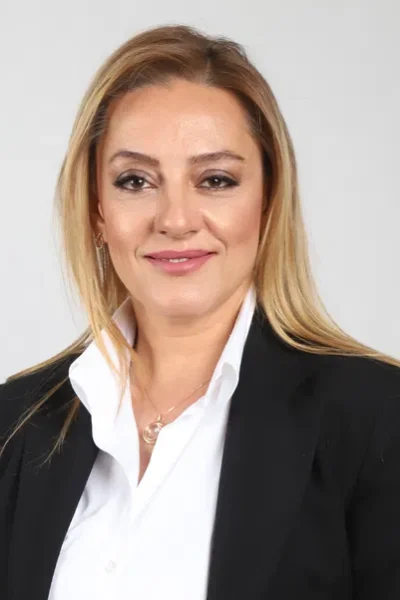
Dentist · Orthodontics · Clear Aligner · Ankara İncekDr. Sevgi Savaş Akbaş offers all orthodontic treatments at her Ankara İncek clinic — including metal brackets, porcelain brackets and clear aligner — with comprehensive examination and digital planning. Having experience in early diagnosis functional orthodontics and adult orthodontics, Dr. Akbaş creates personalized treatment planning according to the unique dynamics of each case. The importance given to the retention phase is the guarantee of long-term success at our clinic.
Orthodontics – Frequently Asked Questions
How many months does orthodontic treatment take to complete?
Are braces or clear aligners better?
Is orthodontics possible for adults?
At what age should orthodontic assessment be performed for children?
How many hours a day should clear aligners be worn?
How long should retention be used?
Is orthodontic treatment painful?
How is tooth brushing done during orthodontic treatment?
What is functional orthodontics and how does it differ from bracket treatment?
Is tooth extraction necessary during orthodontic treatment?
What should I do if a bracket breaks or a clear aligner is lost?
Why Sevgi Savaş Dental Clinic in Ankara İncek for orthodontics?
Book an Appointment for Orthodontic Assessment
Let us determine the right method together for orthodontic treatment that is possible at any age. Book an appointment at our Ankara İncek clinic for a comprehensive examination.
Call Now WhatsApp Ankara Dental Clinic