

Dental Implant Treatment
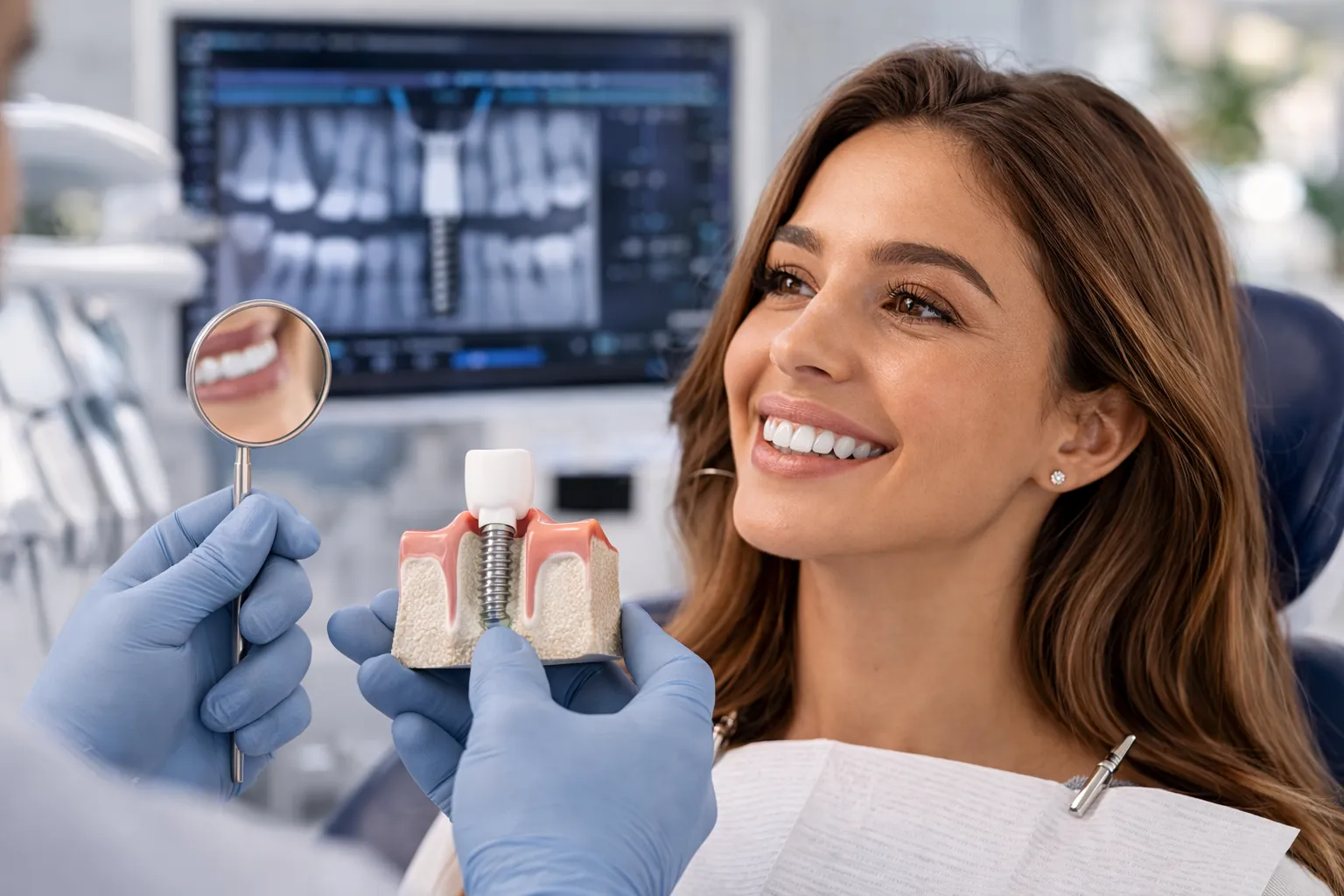
The Most Permanent Solution for Missing Teeth
Dr. Sevgi Savaş Akbaş explains in this video how dental implant treatment is planned, which methods are applied and how the quality of life of her patients changes after treatment.
At our Ankara İncek clinic, personalized solutions are offered for each case using sutureless implant, immediate implant and computer-assisted surgical planning technologies.
💬 WhatsApp AppointmentWhat is a Dental Implant?
A dental implant is a titanium artificial tooth root surgically placed in the jawbone in the area where tooth loss has occurred. Titanium is a biocompatible metal that is not recognized by the body as a foreign object; therefore it permanently fuses with bone tissue. This fusion process is called osseointegration and generally takes 2–4 months.
The implant system consists of three main components: the titanium screw placed in the jawbone (implant body), the piece that provides the connection with the superstructure (abutment) and the visible crown (porcelain or zirconia). Together, they perfectly mimic the root-crown relationship of a natural tooth.
Sutureless Implant (Flapless Surgery)
In traditional implant surgery, the gum is incised and retracted, the implant is placed, and then sutures are applied. With the sutureless (flapless) implant method, these incisions are no longer needed thanks to a computer-assisted surgical guide (surgical template). The implant is placed directly into the appropriate area with millimeter precision without cutting the gum.
Sutureless implant procedures are performed at our Ankara İncek clinic using computer-assisted 3D planning and surgical guides.
Since gum incision and suturing are eliminated, the operation time is noticeably shortened.
Surgical trauma is minimized; the risk of swelling, pain and bleeding is reduced. Return to daily life is faster.
The angle and depth of the implant are predetermined with 3D computer planning; the human factor is minimized.
Post-procedure comfort is much higher compared to classic surgery; the patient can return to normal activities the same day.
Immediate Implant (Same-Day Implant)
An immediate implant is a procedure in which the implant is placed in the same session as the tooth extraction. While in the traditional approach the implant is placed 2–3 months after extraction by waiting for bone healing; in suitable cases these two procedures can be combined in a single session.
It is particularly preferred in the front tooth region for both a quick aesthetic result and to avoid a prolonged treatment process. A temporary aesthetic crown can also be placed on the same day.
All on Four and All on Six – Complete Edentulism Solutions
For patients with complete edentulism, completing all teeth one by one with implants is both costly and requires a long process. All on Four and All on Six concepts are modern solutions that allow a fixed full arch prosthesis to be made on a minimum number of implants.
| Feature | All on Four | All on Six |
|---|---|---|
| Number of implants | 4 implants / jaw | 6 implants / jaw |
| Bone volume requirement | Less (angled implants) | More |
| Chewing force distribution | Good | Very good (more balanced) |
| Long-term stability | High | Very high |
| Same-day temporary prosthesis | Generally applicable | Generally applicable |
| Bone graft requirement | Usually not required | May be required |
| Preferred situation | Cases with bone loss · Speed priority | Maximum long-term stability |
All on Four provides a great advantage especially for patients who do not have sufficient bone in the posterior region of the upper jaw, as the angled implant placement can eliminate the need for sinus lifting. All on Six, on the other hand, is a stronger long-term option where the prosthesis is supported by more implant points.
Bone Graft and Ridge Expansion
For an implant to be placed, the jawbone must have sufficient volume and density. In areas where bone loss has occurred due to prolonged tooth loss, periodontal disease or trauma, bone augmentation may be required prior to implant placement.
Allograft: Tissue obtained from a human bone bank; safe and functional.
Xenograft: Animal-derived (usually bovine) bone powder; widely used.
Synthetic graft: Laboratory-produced biocompatible materials.
Bone graft surgery and implant placement can be performed in the same session or in separate sessions. The decision is made based on the size of the defect, the graft material and the patient's general health status. Graft healing generally takes 4–6 months.
Sinus Lifting (Sinus Augmentation)
The maxillary sinus cavities are located in the posterior region of the upper jaw. With prolonged tooth loss in this area, the sinus expands and the bone resorbs; there may not be enough bone height left to place an implant.
With sinus lifting surgery, the sinus floor is elevated and bone graft is placed in the created space, providing sufficient bone volume for the implant. Two techniques can be applied:
- Lateral (open) approach: In cases of serious bone insufficiency, a surgical window is opened and graft is placed. Bone healing takes 6–9 months; the implant is then placed in a separate session.
- Crestal (closed / osteotome) approach: In cases with less bone loss, the sinus floor is gently elevated through the implant placement channel. The implant can be placed in the same session.
Sinus lifting is a safe procedure with high long-term success rates that resolves cases in the posterior upper jaw that appear unsuitable for implant placement.
Dental Implant Treatment Process
Bone volume, quality and anatomical structures are examined through oral examination, 3D tomography (CBCT) and general health assessment. Which implant method is appropriate is determined at this stage.
Preparatory procedures such as active gum disease treatment, bone graft or sinus lifting are planned and completed when necessary.
The titanium implant is placed in the jawbone under local anesthesia (with the sutureless method if a surgical guide is used). The operation for a single implant takes 15–30 minutes.
An average of 2–3 months is waited for the lower jaw, and 3–4 months for the upper jaw. During this period a temporary prosthesis can be fitted; patients continue their normal diet.
After the implant's complete fusion with bone is confirmed, the abutment is connected. An impression is taken for the crown and sent to the laboratory.
The porcelain or zirconia crown is placed in the mouth along with an occlusion (bite) check. Treatment is complete.
Implant Care and Longevity
Dental implants require regular care just like natural teeth. The implant body is immune to caries; however, when the surrounding gum tissue is neglected, peri-implantitis (infection around the implant) can develop. If not treated in time, this can lead to bone loss and implant failure.
With regular care and dental check-ups, dental implants can be used trouble-free for 20 years or more. Some cases are monitored for a lifetime.
Who Can Have Implants?
The basic prerequisite for dental implant treatment is that bone development must be complete (generally 18 years of age and older). There is no upper age limit; in many patients aged 70–80, if the bone structure and general health are suitable, implants can be successfully placed.
| Condition | Can Implant Be Placed? | Description |
|---|---|---|
| Sufficient bone volume | ✅ Yes | Standard implant protocol |
| Insufficient bone | ✅ With bone graft | Can be applied after preparation |
| Controlled diabetes | ⚠️ Assessment required | May be possible with HbA1c control |
| Controlled hypertension | ✅ Generally yes | With cardiology approval |
| Active gum disease | ❌ Treatment first | Can be applied after periodontal treatment |
| Chemotherapy / radiotherapy | ⚠️ Specialist assessment | May be possible after treatment is completed |
| Smoking | ⚠️ Increased risk | Applicable; higher risk of failure |
The conditions of each case differ from one another. Only clinical examination and 3D tomography assessment can definitively determine implant suitability.
Advantages of Dental Implants
Porcelain or zirconia crown offers an indistinguishable appearance from a natural tooth and chewing comfort.
The jawbone resorbs in empty areas; the implant stops this process by providing the necessary stimulation to the bone.
Unlike a bridge prosthesis, adjacent healthy teeth are not cut and are not damaged.
Potential for 20 years or more of use with regular care; the most economically permanent long-term solution.
With the correction of missing teeth, the quality of speech, chewing and social life directly improves.
Extremely high success rate with correct patient selection, quality materials and experienced application.
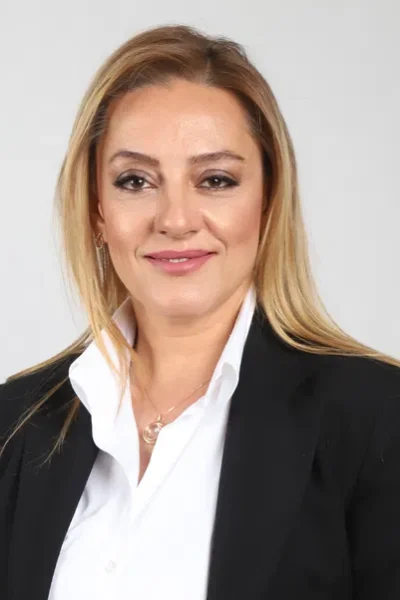
Dr. Sevgi Savaş Akbaş
Dentist · Dental Implant · Sutureless Surgery · Ankara İncekDr. Sevgi Savaş Akbaş performs dental implant treatments at her clinic in Ankara İncek with computer-assisted 3D planning, sutureless surgery and personalized protocols. Each implant case is planned with consideration of clinical examination, radiological assessment and the patient's general health status, and all stages are shared transparently with the patient. A wide range of services is offered, from single tooth loss to All on Four / All on Six full arch restorations.
Dental Implant – Frequently Asked Questions
What is a dental implant and how does it work?
Is implant placement painful?
How many sessions does implant treatment take?
What is the difference between sutureless implant and classic implant?
What is All on Four, and how many implants are needed for a full set of teeth?
Is a bone graft always necessary before an implant?
How long do implants last?
Can people with chronic diseases (diabetes, hypertension) have implants?
What is an immediate implant — can a crown be placed the same day?
What is sinus lifting — can't implants be placed in the posterior upper jaw?
How should implants be cared for?
Why Sevgi Savaş Dental Clinic in Ankara İncek for implant treatment?
The Most Permanent Solution for Your Missing Teeth
Book an assessment appointment at our Ankara İncek clinic for personalized implant treatment with 3D computer planning and sutureless surgery.
Call Now WhatsApp Ankara Dental Clinic →