

Functional Treatments for Teeth Clenching
What is Bruxism? Why Does Teeth Clenching Occur?
Bruxism is the involuntary clenching, pressing together or grinding of teeth. It has two types: "sleep bruxism" that occurs during sleep, and "awake bruxism" seen during the day while awake. Sleep bruxism may go unnoticed by the person as it occurs unconsciously.
Symptoms of Bruxism
If one or more of the following symptoms are present, a dentist should be consulted for bruxism assessment. Some symptoms may be confused with other conditions; diagnosis is made by clinical examination and imaging when necessary.
Jaw muscles that have been overworked throughout the night may feel tired, tight and painful in the morning.
Temporal muscle tension leads to headaches that start in the mornings and increase as the day progresses.
Chewing surfaces are seen to wear much faster than normal; teeth shorten and become sensitive.
The grinding sound heard by people sharing the same room is the clearest indicator of bruxism.
The masseter muscle, constantly overworked, gradually enlarges and transforms the jawline into a near-square shape.
Chronic load on the temporomandibular joint (TMJ) can lead to clicking sounds or restriction in mouth opening.
As enamel wears, sensitivity to cold, heat and sweets increases; pain is felt from exposed dentin tubules.
Sleep bruxism impairs sleep quality; fatigue may persist due to its frequent association with sleep apnea.
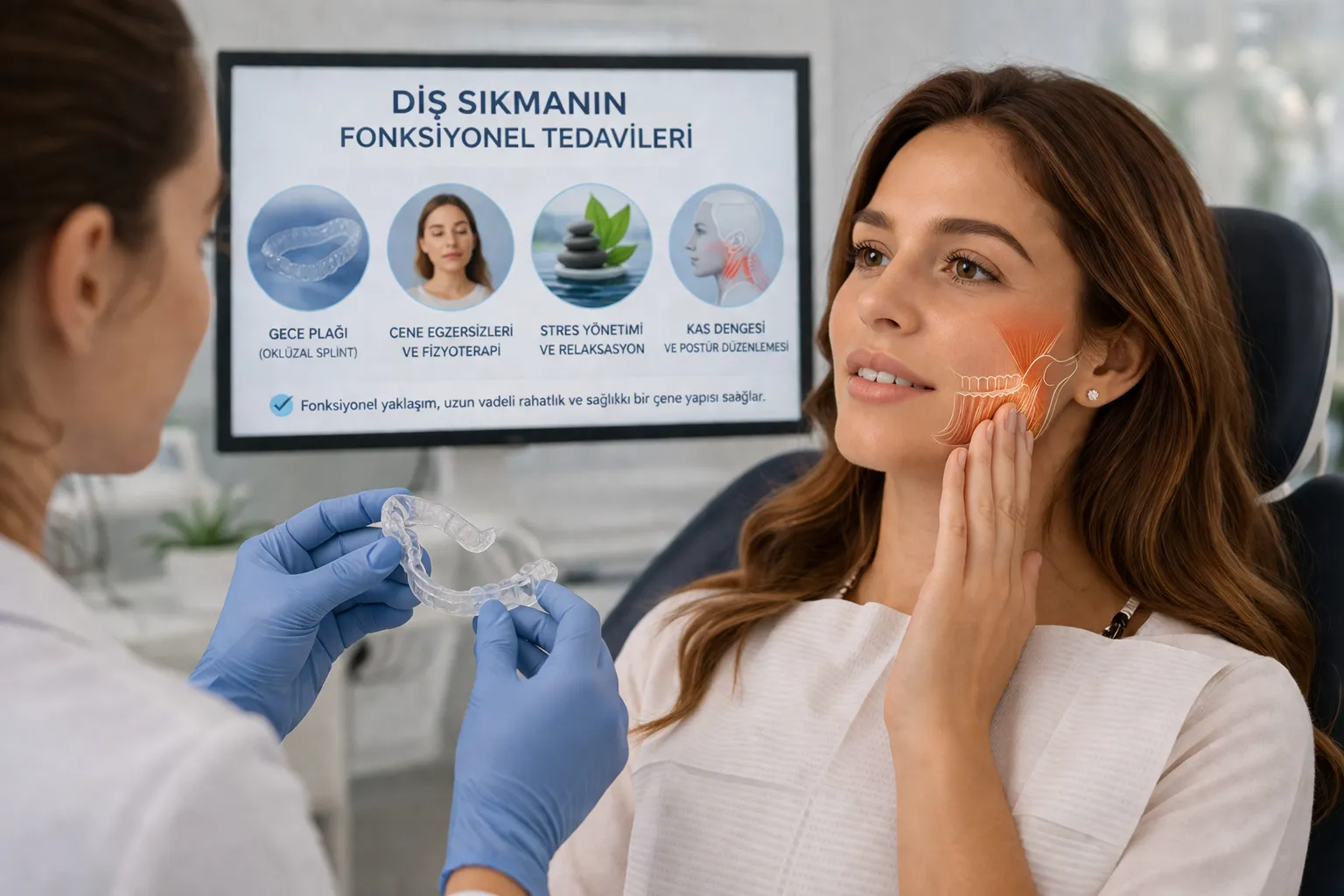
Bruxism Splint (Occlusal Splint / Night Guard)
The bruxism splint is applied by fitting a transparent, biocompatible appliance custom-made with a personalized impression onto the upper or lower teeth at night (and during the day when necessary). The splint protects tooth surfaces from direct contact and distributes the force on the jaw joint in a balanced manner.
Bruxism Treatment with Masseter and Temporal Botox
Botulinum toxin (Botox) injection has become one of the most reliable and effective methods in bruxism treatment in recent years. It directly targets the excessive muscle activity that produces the clenching behavior; unlike the splint, it reduces the force of the muscle at its source.
The masseter, the large chewing muscle at the cheek-jaw level, is the most intensively working muscle in bruxism. It is temporarily relaxed with Botox; teeth clenching force decreases, jaw pain is alleviated. Additionally, by reducing the hypertrophic (enlarged) masseter muscle, it slims the jawline — providing both therapeutic and aesthetic effects.
The temporal muscle located in the temple region is the most bruxism-affected muscle after the masseter. Temporal Botox reduces temple-originating headaches, morning fatigue and jaw closing force. When applied in combination with masseter Botox, much more comprehensive relief is achieved.
It is a painless procedure completed in 10–15 minutes with fine needles. The effect begins in 3–7 days; maximum effect settles in 3–4 weeks. Total effect lasts 4–6 months. Can be reapplied when the effect diminishes.
Moderate and severe bruxism · Cases where splint use is not sufficient · Those who want to improve facial aesthetics with masseter hypertrophy · Those experiencing chronic temple-originating headaches · Every adult patient with suitable general health status
Botox reduces muscle activity; however, it does not eliminate the psychological or occlusion-related triggers of bruxism. For a lasting solution, stress management, occlusal adjustment and if necessary psychiatric/psychological support should be planned in combination.
Dental Mesotherapy
Dental mesotherapy is a complementary treatment method in which very low doses of vitamins, minerals, antioxidants and when necessary muscle relaxant components are applied to the jaw and facial muscles with fine needles. It offers a holistic option for patients who wish to avoid systemic medication in bruxism treatment or are looking for an alternative to Botox.
Functional Treatments
Functional treatments target the underlying dental and behavioral causes of bruxism. They are applied alone or in combination with other methods.
- Occlusal adjustment: Unbalanced bite in the teeth can trigger and intensify bruxism. When the bite is adjusted with filling, restoration or orthodontic treatment, the muscle load is significantly reduced.
- Missing tooth replacement: Missing teeth especially in the molar region disrupts force distribution in the jaw and deepens bruxism. Completion with implant or prosthesis is necessary.
- Jaw muscle exercises: Exercises aimed at relaxing the masseter and temporal muscles are a supportive pillar of treatment. An individual exercise program is shown to each patient at our clinic.
- Stress management: Stress is the most common trigger of bruxism. Mindfulness, meditation, yoga and psychological support when necessary increase the sustainability of treatment.
- Sleep hygiene: Regular sleep schedules, reducing screen and caffeine consumption before sleep can alleviate the severity of sleep bruxism.
- Awareness building: In daytime bruxism, self-monitoring and developing the habit of relaxing the teeth is the first step of treatment.
Combined Treatment Planning by Severity
A single method is usually not sufficient in bruxism treatment. A personalized combined plan is created by evaluating the patient's complaints, the severity of bruxism and the underlying causes.
| Severity | Primary Method | Combined Support | Goal |
|---|---|---|---|
| Mild | Bruxism splint | Functional exercises + awareness | Tooth protection, muscle relaxation |
| Moderate | Bruxism splint | Dental mesotherapy + functional therapy | Pain control + tissue protection |
| Severe | Masseter ± temporal Botox | Bruxism splint + occlusal adjustment | Muscle activity reduction + permanent protection |
| Aesthetics-focused | Masseter Botox | Temporal Botox (if necessary) | Facial slimming + pain relief |
| All types | Stress management | Sleep hygiene + psychological support if needed | Trigger control |
After comprehensive examination at our clinic, this plan is created transparently according to the patient's condition and expectations, and the stages are shared.
What Happens If Bruxism Is Left Untreated?
Once enamel wears, it does not return. Shortened teeth become sensitive, aesthetics deteriorate and bite changes. Crown or bridge treatment may become inevitable in later stages.
Chronic excessive force can fracture fillings, crowns, veneers and intact teeth. Fractured teeth require emergency intervention.
Chronic load on the temporomandibular joint leads to joint clicking, locking and restriction in opening. In advanced cases it may progress to surgery.
Bone tissue around the teeth cannot withstand excessive force; bone resorption can develop. This also negatively affects implant success.
The constantly overworked masseter muscle enlarges; the face transforms from oval to square. Creates cosmetic concerns; even if corrected with Botox, it recurs if the underlying bruxism is not treated.
Untreated bruxism can evolve into migraines, ear pain, neck and shoulder tension and permanent jaw pain. Quality of life deteriorates significantly.

Dr. Sevgi Savaş Akbaş
Dentist · Bruxism & TMJ · Masseter Botox · Ankara İncekDr. Sevgi Savaş Akbaş plans bruxism treatment at her Ankara İncek clinic in combination with personalized occlusal splint, masseter and temporal Botox, dental mesotherapy and functional occlusal adjustments. For each patient, the underlying causes are evaluated, appropriate methods are determined according to severity, and the treatment stages are shared transparently with the patient. Both therapeutic and aesthetic results (masseter hypertrophy correction) are offered.
Teeth Clenching (Bruxism) – Frequently Asked Questions
How do I know if I clench my teeth?
Does the bruxism splint stop teeth clenching?
How long does masseter Botox remain effective?
What is the difference between temporal Botox and masseter Botox?
Is the Botox injection painful?
Can dental mesotherapy substitute for Botox?
Does bruxism heal completely?
Can masseter hypertrophy (facial widening) be treated?
What is the relationship between bruxism and TMJ disorder?
Does teeth clenching in children require treatment?
Why Sevgi Savaş Clinic in Ankara İncek for bruxism treatment?
Let's Solve Your Teeth Clenching Problem Together
If you are experiencing morning jaw pain, headaches or tooth wear, book an appointment at our Ankara İncek clinic for a comprehensive bruxism assessment.
Call Now WhatsApp Ankara Dental Clinic