

Zirconia Crowns
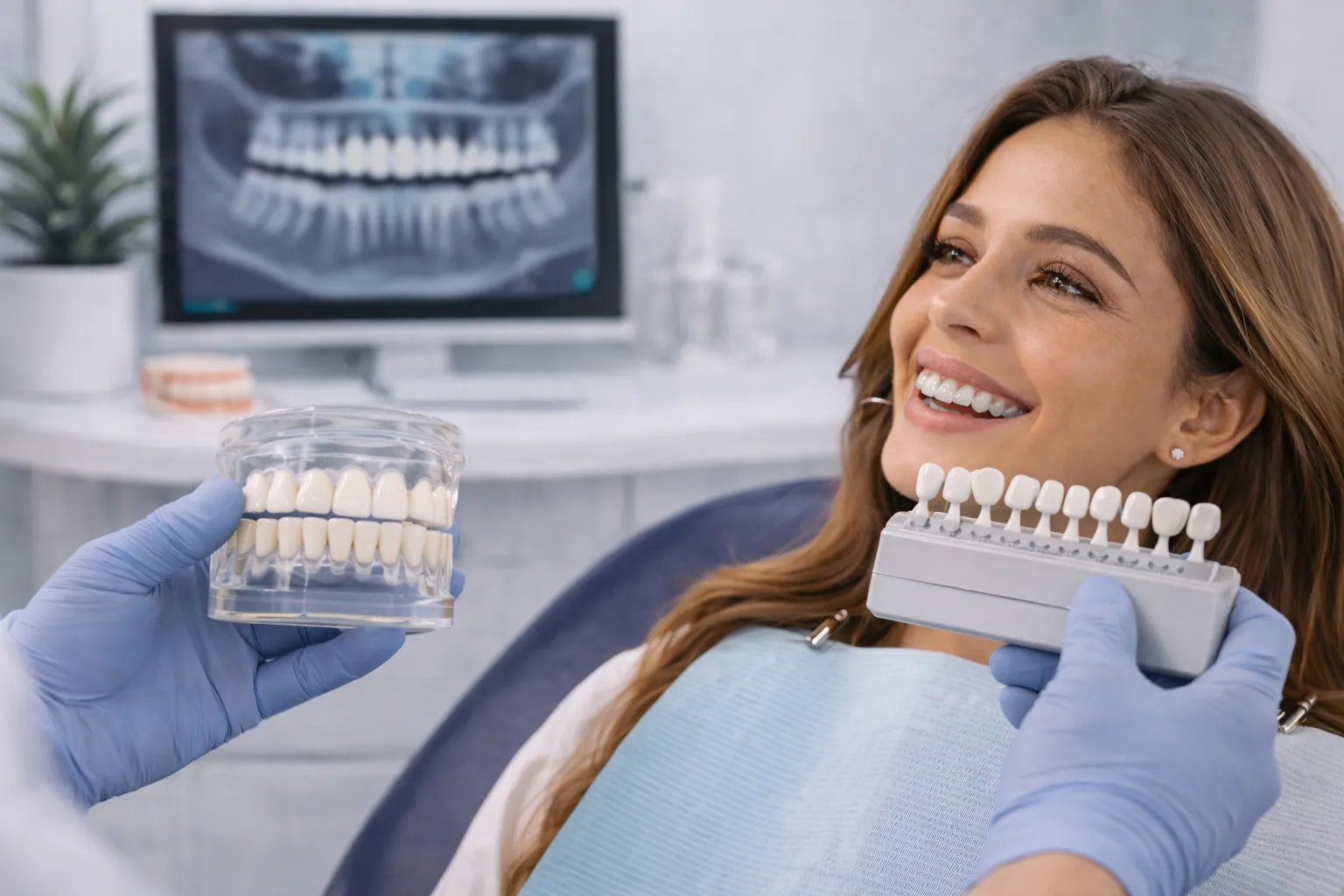
What Is a Zirconia Crown?
Zirconia (zirconium dioxide — ZrO₂) is a white, hard and chemically inert ceramic material found in nature. In dentistry, it is processed with special CAD/CAM (computer-aided design and manufacturing) technology and used as the framework for crowns, bridges and implant-supported prostheses.
Types of Zirconia Crowns
Not all zirconia crowns are the same. The type of zirconia used and the production technique create determining differences in terms of aesthetics, durability and region of use.
Feldspathic porcelain is layered over a zirconia framework. Provides the highest aesthetic result; preferred for front teeth. The porcelain layer may chip in posterior areas exposed to high chewing load.
The framework and crown are produced entirely from zirconia; there is no porcelain layer. Very high fracture strength; ideal for back teeth and bruxism cases. Aesthetics may be slightly less lustrous than layered; improving steadily with technological advances.
Special zirconia formulation with high light transmittance. Balances aesthetics and durability for both front and back teeth. More aesthetic than standard monolithic, more durable than layered.
Crown seated on a titanium or zirconia implant abutment. The metal-free zirconia crown completes the visible part of the implant with a natural tooth appearance; no grey reflection from the gum margin.
Monolithic Zirconia – The Preferred Solution for Posterior Teeth
Monolithic zirconia are single-piece crowns where the entire restoration structure consists only of zirconia. Since they contain no porcelain layer, the risk of fracture is close to zero; this feature has made them the standard solution for posterior tooth restorations.
Implant-Supported Zirconia Crowns
After a dental implant procedure is completed and osseointegration is achieved, the visible part placed on the implant is called an "implant-supported crown." Zirconia crown is the most preferred material at this stage.
- No grey gum line: When a metal abutment or metal-porcelain crown is used, a grey colour line may form at the gum over time. This problem is completely prevented with a zirconia crown.
- Natural appearance: Thanks to zirconia's white colour and light transmittance, your implant tooth is indistinguishable from a natural tooth.
- Safe for those with metal allergy: The titanium implant + zirconia crown combination is ideal for patients with metal allergy or those who prefer holistic dentistry.
- Long-term aesthetic stability: Zirconia surface is resistant to colour change; implant-supported appearance is maintained for years.
Zirconia Bridge Prostheses
In cases of multiple consecutive tooth loss, a zirconia bridge prosthesis may be preferred instead of placing an implant for each missing tooth. A bridge is created by crowning the teeth on both sides (abutment teeth) and placing the missing tooth (pontic) between them.
Zirconia – E.max – Metal-Porcelain Crown Comparison
| Feature | Zirconia Crown | E.max (All-Ceramic) | Metal-Porcelain Crown |
|---|---|---|---|
| Metal content | None | None | Present |
| Light transmittance | High (very high in HT) | Very high | Low (opaque) |
| Aesthetics (front tooth) | Very good | Excellent | Moderate |
| Fracture strength | Very high (900–1200 MPa) | High (400–500 MPa) | High (metal framework) |
| Gum colour | No dark line | No dark line | Grey-blue line over time |
| Region of use | All teeth | Front teeth (preferred) | Back teeth (preferred) |
| Lifespan | 15–20 years | 10–15 years | 8–12 years |
| Cost | Moderate–high | Moderate–high | Moderate |
If light transmittance is a priority for front teeth, E.max stands out; if durability is critical for all teeth or the posterior region, zirconia comes to the fore. In some cases, the combination of E.max for front teeth and monolithic zirconia for back teeth gives the most optimal result.
Indications for Zirconia Crown
| Situation | Is Zirconia Crown Suitable? | Description |
|---|---|---|
| Severe tooth decay | ✅ Yes | Crown is preferred when insufficient tissue remains for a filling |
| After root canal treatment | ✅ Yes | Protects the brittle tooth from chewing forces |
| Fractured / cracked tooth | ✅ Yes | Wraps the entire tooth; prevents fragmentation |
| Discolouration not corrected by whitening | ✅ Yes | Provides the ability to completely mask the colour |
| Implant-supported restoration | ✅ Yes | Natural appearance + no grey gum line |
| Bridge prosthesis framework | ✅ Yes | Production of durable metal-free bridge |
| Bruxism patient | ✅ With monolithic | Monolithic should be selected instead of porcelain layer |
| Metal allergy | ✅ Ideal choice | The only fully metal-free crown option |
| Sufficient tooth tissue, only aesthetic problem | ⚠️ Assessment required | Laminate veneer may require less preparation |
Zirconia Crown Application Process
The current condition of the tooth and surrounding tissues is evaluated. Root canal treatment or post-core application is planned if necessary. Colour, form and smile design targets are established.
If active decay or gum disease is present, it is treated first. In teeth with significant material loss, post-core (root pin + substructure) is applied to prepare the foundation for the crown.
The tooth is brought into the form on which the crown will sit; equal amounts of tissue are removed from its circumference. Performed painlessly under local anaesthesia. The amount of preparation varies depending on the crown type selected and the current condition of the tooth.
The exact form of the tooth is recorded with an intraoral scanner or plaster impression method. Digital impression minimizes the margin of error and ensures millimetric precision in CAD/CAM production.
A temporary crown is fitted until laboratory production is complete (usually 5–7 days). Aesthetics and function are maintained; tooth sensitivity is prevented.
The digital design or impression is transferred to the laboratory. The zirconia block is shaped by a computer-controlled milling machine; colour is completed with surface staining and firing processes.
The crown is placed in the mouth and fit, colour and occlusion are checked; fine adjustments are made if necessary. After approval it is permanently bonded with a special adhesive.
The total process is completed in 2–3 sessions and within 7–10 days. An accelerated protocol can be applied in urgent cases.
Zirconia Crown Care and Lifespan
With correct care and regular check-ups, zirconia crowns can be used for 15–20 years, and in some cases longer. The crown body itself is immune to caries; however problems can be experienced over time if the tooth tissue underneath and gum health are not maintained.
Brushing twice daily with a soft-bristled brush and fluoride toothpaste must be performed. Dental floss or an interdental brush should be used to prevent plaque build-up at crown margins.
The porcelain surface of a layered zirconia crown should not come into contact with excessively hard foods. Monolithic crowns are more durable; however cracking hard-shelled foods with the teeth should still be avoided.
Teeth clenching habit can wear down zirconia crowns or crack the porcelain layer. If bruxism is present, masseter Botox and/or night guard use is mandatory.
Every 6 months, crown margin fit, gum health and bonding integrity are assessed at a dental check-up. Early detection of problems avoids major repairs.
The tooth tissue under the crown can decay; this is the most common cause of failure. Keeping crown margins clean with dental floss and regular dental check-ups minimizes this risk.
Avoid abrasive toothpastes; they can dull the zirconia surface. Fluoride toothpaste and antiseptic mouthwash are suitable for zirconia crowns.

Dr. Sevgi Savaş Akbaş
Dentist · Prosthodontics · Zirconia Crown · Ankara İncekDr. Sevgi Savaş Akbaş produces zirconia crowns at her Ankara İncek clinic with CAD/CAM-supported digital impression, personalized colour planning and approved laboratory collaboration. All zirconia prosthetic solutions are offered from single-tooth crowns to implant-supported prostheses, and from zirconia bridges to monolithic zirconia applications; each case is planned with comprehensive examination and smile design integration.
Zirconia Crown – Frequently Asked Questions
Is zirconia crown application painful?
How many years does a zirconia crown last?
What is the difference between monolithic zirconia and layered zirconia?
What is the difference between a zirconia crown and an E.max crown?
Does a zirconia crown damage the gum?
Is a zirconia crown necessary for a root canal-treated tooth?
Why is CAD/CAM technology important for zirconia crowns?
What is the difference between an implant-supported zirconia crown and a metal-porcelain crown?
Should I prefer a bridge prosthesis or an implant?
Is a zirconia crown noticeable — does it look artificial?
Why Sevgi Savaş Dental Clinic in Ankara İncek for zirconia crowns?
Book an Appointment for Zirconia Crown Assessment
Have an examination at our Ankara İncek clinic about the metal-free, long-lasting zirconia crown solution for your fractured, worn or discoloured teeth.
Call Now WhatsApp Ankara Dental Clinic