

Teeth Whitening
Causes of Tooth Discoloration
Tooth discoloration is evaluated in two main categories: extrinsic discoloration that affects from the outside, and intrinsic discoloration that originates from within the tooth structure. This distinction directly determines which method will be applied.
| Type | Sources | Response to Whitening |
|---|---|---|
| Extrinsic (External) | Tea, coffee, red wine, smoking, colored foods, insufficient hygiene | Very good response — professional cleaning + whitening effective |
| Intrinsic (Internal) | Aging (enamel thinning), tetracycline antibiotic, excess fluoride (fluorosis), developmental disorders | Partial response — tetracycline cases require prolonged and intensive treatment |
| Root canal treatment | As the pulp is removed, the tooth gradually darkens | Effective with non-vital (single tooth) whitening |
| Aging | As enamel thins, yellow dentin becomes more visible | Good response — several shades of lightening achieved |
Before starting whitening, professional teeth cleaning (tartar and plaque removal) must be performed. Deposits on the teeth prevent the whitening gel from contacting the enamel.
In-Office Whitening – Same-Session Result in a Clinical Setting
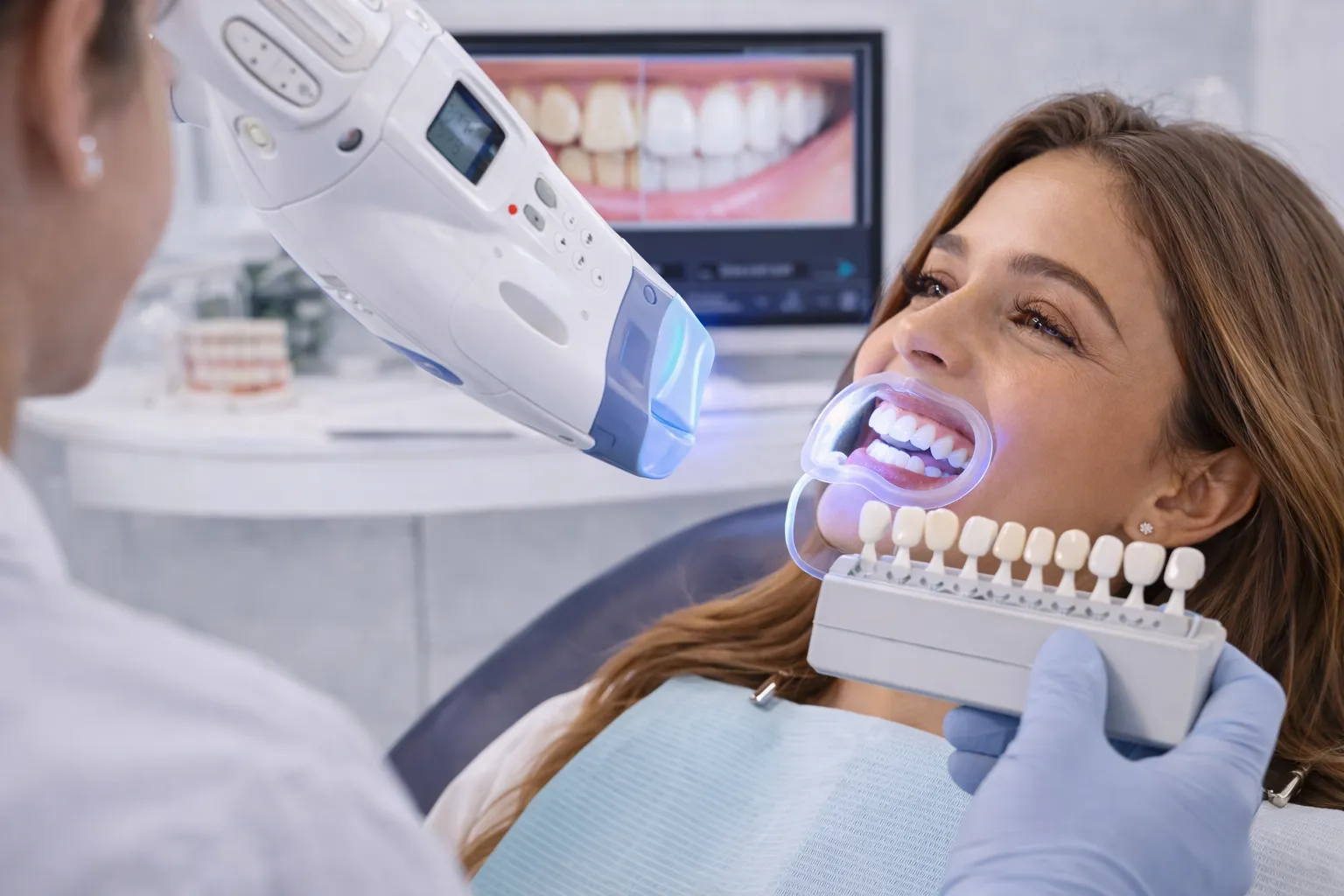
In-office whitening is the fastest and most effective whitening method, applied in a clinical setting under the supervision of a dentist. High-concentration hydrogen peroxide gel is applied to the teeth; the procedure is accelerated by activation with a special LED or laser light device.
Gum protective barrier is applied · High-concentration whitening gel is applied to the teeth · Activated with LED/laser light · 3–4 application cycles, 45–60 minutes total · Procedure is completed by removing the gel
2–4 shades of lightening in a single session · Whitening is visible immediately after the procedure · Longevity increases if supported with combined treatment · Multiple sessions may be required for tetracycline discoloration
Those who want fast results · Before weddings, special events · Those who cannot or do not want to use at-home trays · Those with homogeneous and deep discoloration
Sensitivity for the first 48 hours is normal · Colored food and smoking not recommended for 48–72 hours · Result is extended if supported with at-home tray · Can be reapplied every 6–12 months
At-Home Whitening – Gradual and Controlled Result
In at-home whitening, personalized transparent trays are prepared according to an impression taken from inside the mouth. Carbamide peroxide gel prescribed by the dentist is placed inside the trays and the patient uses them at home for specified periods.
Combined Whitening – The Longest-Lasting Result
Combined whitening consists of in-office clinical application followed by support with at-home tray treatment. Since the advantages of both methods are used together, fast results are achieved and longevity is extended.
Non-Vital Whitening – Single Tooth Lightening in Root Canal-Treated Teeth
Root canal-treated teeth can darken over time; this creates an aesthetic problem by visibly differing from neighboring living teeth. Non-vital whitening is a special method specific to this single-tooth discoloration that most competing clinic sites do not detail sufficiently.
The dentist places a special whitening agent (sodium perborate) inside the canal and seals it with a temporary filling. A few days later, the color change is checked; the procedure is repeated if necessary. When the target shade is achieved, the agent is removed and a permanent filling is placed.
Comparison of Whitening Methods
| Method | Location | Duration | Lightening | Longevity | Who For? |
|---|---|---|---|---|---|
| In-office | Clinic | 45–60 min | 2–4 shades | 6 months–1 year | Those wanting fast results |
| At-home | Home (with dentist prescription) | 10–15 days | 2–4 shades | 1–2 years | Those preferring gradual approach |
| Combined | Clinic + home | 2–4 weeks total | 5–8 shades | 2–3 years | Those wanting maximum results |
| Non-vital | Clinic (intra-canal) | 2–3 sessions | Personalized | Long-term | Single root canal-treated tooth |
Are "Natural" At-Home Teeth Whitening Methods Harmful?
Hundreds of "natural whitening" methods are recommended via social media and the internet. Scientific evidence shows that the vast majority of these methods are ineffective and some are seriously harmful.
Hydrogen peroxide and carbamide peroxide used in professional whitening are safe when applied by a dentist at the correct concentration and for the correct duration. However, uncontrolled or excessive use can cause sensitivity and enamel damage.
What to Watch Out for After Teeth Whitening
After whitening, enamel pores are open; this is the period with the highest risk of color uptake. Tea, coffee, red wine, cola, tomato sauce and smoking are strongly not recommended. Lightly colored or colorless foods should be preferred.
Cold-hot sensitivity for 24–48 hours after whitening is an expected side effect. It is not permanent; it can be controlled with a painkiller taken as recommended by the dentist. If sensitivity is present, use lukewarm water and avoid very cold or hot foods.
These habits are the most important factor directly determining the longevity of whitening. Smoking is the fastest element that deteriorates whitening results. Drinking water or rinsing the mouth immediately after consuming staining foods and beverages helps.
Professional tartar cleaning and polishing every 6 months makes a significant contribution to preserving whitening results. It prevents surface stain accumulation and maintains gum health.
In-office whitening can be repeated every 6–12 months; with combined treatment this period extends to 1–2 years. At-home trays can be used for regular touch-ups. An individual program is determined with your dentist's guidance.
Fluoride toothpaste after whitening supports enamel remineralization. A soft-bristled brush and standard fluoride toothpaste should be preferred rather than abrasive "whitening toothpastes."
Who Can Have Teeth Whitening?
| Condition | Suitable? | Description |
|---|---|---|
| Healthy teeth and gums | ✅ Yes | Ideal candidate; no restrictions |
| Extrinsic (external) discoloration | ✅ Best response | Tea, coffee, smoking stains are the best-responding group |
| Root canal-treated tooth discoloration | ✅ With non-vital method | Only intra-canal whitening is applied |
| Tetracycline discoloration | ⚠️ Difficult case | Requires prolonged combined treatment; complete result is difficult |
| Active tooth decay or gum disease | ⛔ Treatment first | Cannot be applied before decay and inflammation are treated |
| Pregnancy and breastfeeding | ⛔ Not recommended | Whitening is not recommended during this period |
| Under 16 years of age | ⛔ Not recommended | Not applied as nerve and enamel development is not complete |
| Tooth sensitivity | ⚠️ Assessment required | Can be applied with sensitivity management or deferred |
Before starting whitening, resolving active problems (decay, gum disease, sensitivity) is mandatory for both safety and efficacy.
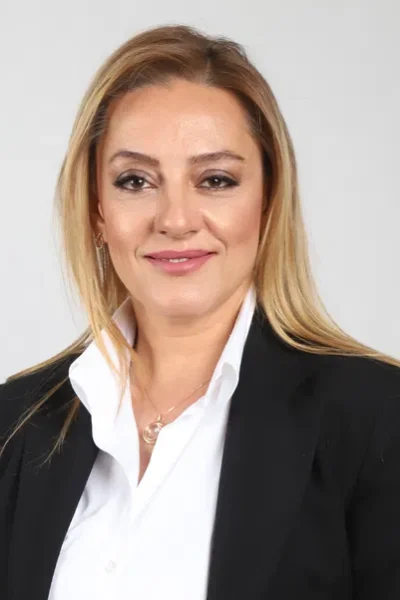
Dr. Sevgi Savaş Akbaş
Dentist · Aesthetic Dentistry · Teeth Whitening · Ankara İncekDr. Sevgi Savaş Akbaş plans teeth whitening at her Ankara İncek clinic in a personalized manner, combining in-office, at-home, combined and non-vital methods according to the type and severity of the discoloration. Whitening, which is evaluated as part of the entire aesthetic smile design, is planned in coordination with veneer and other restorations, with color harmony with restorations taken into consideration.
Teeth Whitening – Frequently Asked Questions
Does teeth whitening damage teeth?
How long does teeth whitening last?
Can I whiten my root canal-treated tooth?
What needs to be done before whitening?
Will my fillings and restorations whiten?
Which should I choose between in-office and at-home whitening?
Is there pain during whitening?
Does tetracycline discoloration whiten?
Is whitening with baking soda or lemon safe?
Can a pregnant or breastfeeding person have teeth whitening?
Why Sevgi Savaş Clinic in Ankara İncek for teeth whitening?
Book an Appointment for a Whiter Smile
In-office whitening for single-session results, combined whitening for lasting results, or non-vital whitening planning for your root canal-treated tooth. Have your examination at our Ankara İncek clinic.
Call Now WhatsApp Ankara Dental Clinic